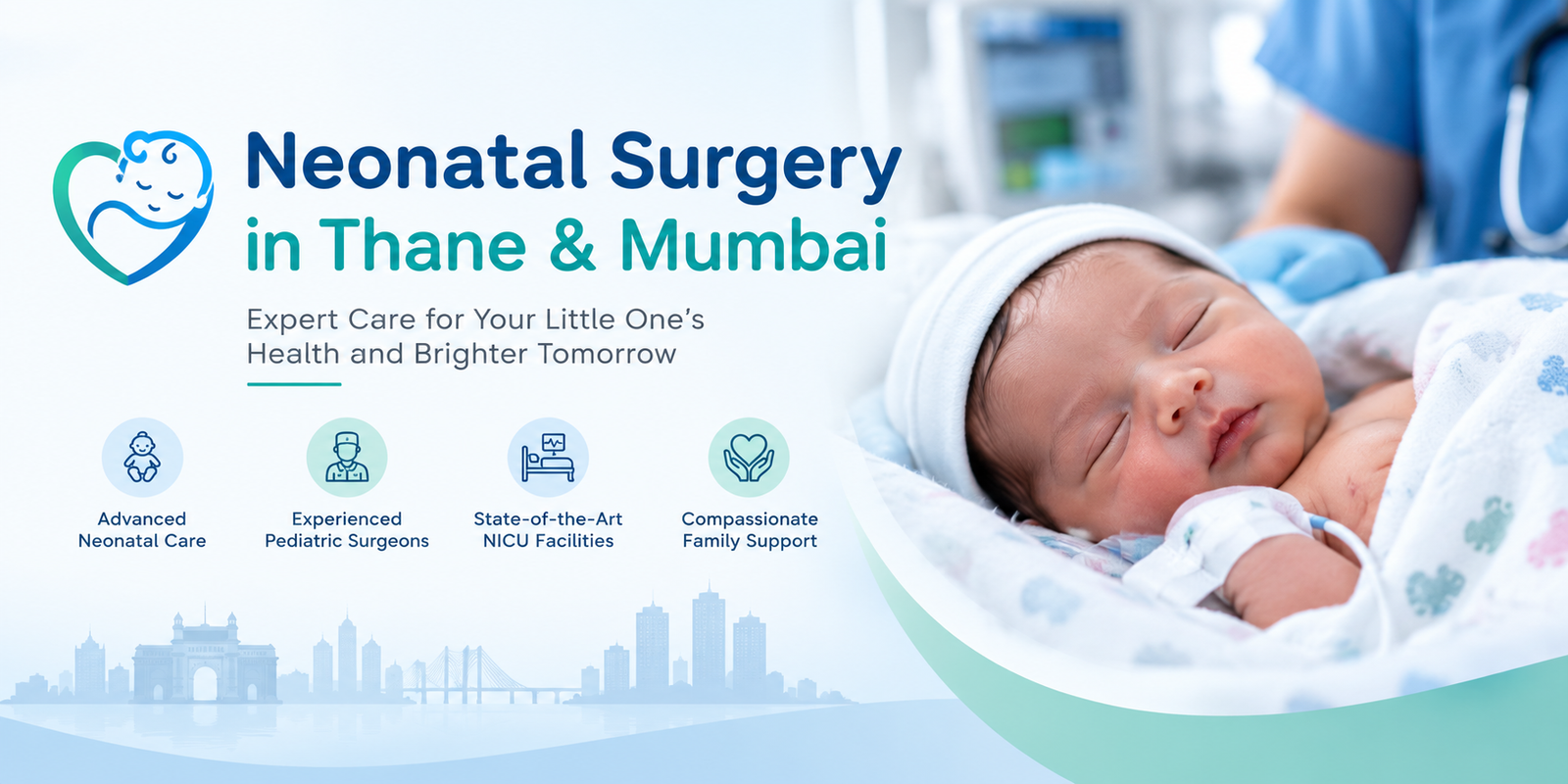
Neonatal Surgery in Thane & Mumbai
The first few days of a baby’s life are precious, and for some newborns, they can also be the most challenging. Certain babies are born with congenital conditions that require immediate evaluation and specialized surgical treatment.
Dr. Devendra Taide is an experienced Pediatric, Neonatal & Laparoscopic Surgeon providing advanced neonatal surgical care for newborns with congenital anomalies and complex surgical conditions. He also offers robotic-assisted pediatric surgery for selected pediatric procedures, wherever appropriate. Working closely with neonatologists, pediatricians, anesthesiologists, and neonatal intensive care teams, he ensures every baby receives comprehensive, compassionate, and evidence-based care.
With timely diagnosis, advanced surgical techniques, and dedicated post-operative support, many newborns with complex conditions can go on to live healthy and fulfilling lives.
What is Neonatal Surgery?
Neonatal Surgery is a highly specialized branch of pediatric surgery that focuses on diagnosing and treating surgical conditions in newborn babies, typically within the first 28 days of life.
Many neonatal conditions are congenital, meaning they are present at birth due to developmental abnormalities during pregnancy. Some conditions are detected during antenatal scans, while others become apparent soon after birth.
Early diagnosis and prompt surgical intervention are essential to improve outcomes, reduce complications, and support healthy growth and development.
Neonatal Conditions We Treat
Dr. Devendra Taide provides expert surgical management for a wide range of neonatal conditions.
Congenital Diaphragmatic Hernia (CDH)
A condition where there is an opening in the diaphragm, allowing abdominal organs to move into the chest and affect lung development. Early surgical repair is often essential after stabilizing the baby.
Esophageal Atresia (EA)
A congenital condition in which the food pipe (esophagus) does not develop normally, preventing normal feeding and requiring surgical correction.
Tracheoesophageal Fistula (TEF)
An abnormal connection between the food pipe and the windpipe that can lead to choking, coughing, breathing difficulties, and feeding problems.
Intestinal Atresia
A blockage or absence of a portion of the intestine that prevents normal passage of food and requires surgical treatment soon after birth.
Anorectal Malformations (ARM)
Congenital abnormalities affecting the anus and rectum that require specialized surgical correction to restore normal bowel function.
Omphalocele
A birth defect in which abdominal organs develop outside the baby’s body through the belly button and are covered by a protective membrane.
Gastroschisis
A congenital condition where the baby’s intestines develop outside the abdominal wall without a protective covering, requiring urgent neonatal surgical care.
Other Congenital Surgical Conditions
- Congenital intestinal obstruction
- Meconium ileus
- Malrotation with volvulus
- Congenital abdominal wall defects
Neonatal abdominal cysts
Signs & Symptoms That Require Immediate Medical Attention
Some newborns may show signs of a surgical condition soon after birth.
Parents and healthcare providers should seek immediate evaluation if a newborn has:
- Difficulty breathing
- Persistent vomiting, especially green (bilious) vomiting
- Excessive abdominal swelling
- Difficulty feeding
- Choking or coughing during feeding
- Failure to pass stool within the first 24–48 hours
- Abdominal organs visible outside the body at birth
- Severe abdominal distension
- Poor weight gain
- Persistent crying with abdominal discomfort
Many neonatal surgical conditions are emergencies and require immediate specialized care.
Diagnosis & Evaluation
Accurate diagnosis is essential for planning safe and effective treatment.
Depending on the condition, evaluation may include:
- Detailed clinical examination
- Antenatal ultrasound review
- Neonatal ultrasound
- Digital X-rays
- Contrast studies
- Echocardiography (when indicated)
- Blood investigations
- CT Scan or MRI in selected cases
A multidisciplinary team approach ensures every newborn receives individualized treatment planning.
Advanced Treatment Options
Treatment depends on the baby’s condition, overall health, and urgency of the diagnosis.
Neonatal Surgical Procedures
Many congenital conditions require specialized corrective surgery performed by an experienced neonatal surgeon using advanced techniques.
Minimally Invasive Neonatal Surgery
Selected newborn conditions may be treated using minimally invasive laparoscopic or thoracoscopic techniques, offering:
- Smaller incisions
- Less pain
- Reduced blood loss
- Faster recovery
- Better cosmetic outcomes
Suitability depends on the baby’s condition and overall health.
Comprehensive Neonatal Intensive Care
Surgery is only one part of treatment. Babies often require specialized neonatal intensive care before and after surgery, including respiratory support, nutritional management, infection control, and continuous monitoring to ensure the best possible recovery.
Frequently Asked Questions
What is neonatal surgery?
Neonatal surgery is a specialized branch of pediatric surgery that treats newborn babies with congenital anomalies and surgical conditions present at or shortly after birth.
Can congenital conditions be detected before birth?
Yes. Many congenital anomalies can be identified during routine antenatal ultrasound scans, allowing parents and doctors to plan specialized care before delivery.
Is neonatal surgery safe?
Advances in neonatal anesthesia, intensive care, and pediatric surgical techniques have significantly improved the safety and outcomes of neonatal surgery. Each baby’s treatment is carefully planned based on their condition.
Will baby need NICU care after surgery?
Many newborns require monitoring in the Neonatal Intensive Care Unit (NICU) before and after surgery to support breathing, feeding, and recovery.
What is the recovery period after neonatal surgery?
Recovery depends on the type of condition, the complexity of surgery, and the baby’s overall health. Dr. Devendra Taide works closely with the neonatal care team to ensure comprehensive follow-up and long-term care.